Food & cafes
Best street food in Fes — where locals actually eat
Insider tips, hidden gems, and honest guides — from someone who travels Morocco and dares to try everything.
I share the real Morocco that guidebooks miss. No tourist traps, no fluff, just honest advice from someone who travels here. Dare to explore with me.
Tangier has a reputation problem. Most travelers pass through on their way somewhere else, a quick ferry crossing from Spain, a night before heading south. They see the port, the medina entrance, maybe the Kasbah and leave thinking they’ve seen Tangier. They haven’t even started.
I’ve spent enough time in Tangier to know that the city reveals itself slowly. The best parts are not on any map, not mentioned in any guidebook, and not visible from the main tourist circuit. They require walking, getting slightly lost and being willing to sit in a café for an hour watching the neighborhood wake up.
Here is what I’ve found.
THE CAVE OF HERCULES : WORTH THE TRIP OUTSIDE THE CITY
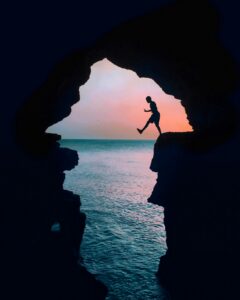
About 14km west of Tangier, the Cave of Hercules is one of those places that sounds like a tourist trap and turns out to be genuinely extraordinary. The cave was used for centuries by Berber people to cut millstones, you can still see the circular marks on the walls. One opening faces inland, the other opens directly to the Atlantic in a shape that eerily resembles the outline of Africa. Local legend says Hercules slept here before performing his legendary labors. Go early morning before the tour buses arrive, the light through the sea opening is remarkable.
THE GRAND SOCCO : THE REAL HEART OF TANGIER
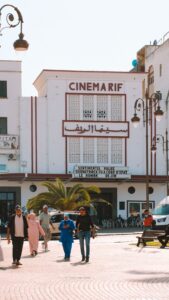
Every visitor passes through the Grand Socco, the large square that marks the boundary between the old medina and the modern city but few stop long enough to understand it. This is where Tangier’s rhythms are most visible: the market vendors who set up at dawn, the women from the Rif mountains selling vegetables in their distinctive red and white striped garments, the old men on benches watching everything. The Cinema Rif on the square is one of the last independent art cinemas in Morocco, still showing films and hosting cultural events. The gardens behind the square, the Jardins de la Mendoubia have enormous dragon trees that are centuries old. Sit here for an hour and watch the city move around you.
THE PETIT SOCCO : THE SQUARE EVERYONE WALKS PAST
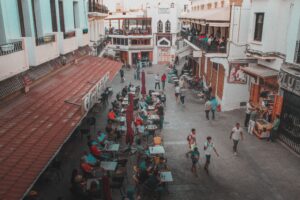
Every visitor to Tangier walks through the Grand Socco, the large square just inside the medina. Almost none of them find the Petit Socco, tucked deeper inside, five minutes on foot but a completely different world. It’s a small, irregular square surrounded by old cafés that haven’t changed since the 1950s, when Tangier was an International Zone and writers like Paul Bowles and William Burroughs sat here for hours. The Café Central on the square still serves mint tea in the same glasses. Sit outside in the morning when the light comes through the narrow streets and you’ll understand why they never left.
The Petit Socco is also the best place to watch Tangier’s social life, the old men playing cards, the teenagers on their phones, the vendors pushing carts through impossibly narrow gaps. Don’t rush it. This is not a sight to photograph and move on from. It’s a place to stay.
THE MARSHAN : TANGIER’S FORGOTTEN NEIGHBOURHOOD
The Marshan is a residential plateau to the west of the medina that almost no tourist ever reaches. It was once the most elegant neighborhood in Tangier, grand villas, wide boulevards, a theatre that hosted the best performers in North Africa. Most of that elegance has faded, but what replaced it is something more interesting: a completely normal Moroccan neighborhood where life happens without any performance for visitors.
Walk up from the Kasbah through the Bab Haha gate and keep going west. The streets widen, the crowds disappear, and suddenly you’re in a neighborhood of corner shops, children playing football, women hanging washing from balconies. There’s a small park at the edge of the plateau with a bench that looks directly out over the Strait of Gibraltar. On a clear day you can see Spain. It’s one of the best views in Morocco and there’s never anyone there.
PALAIS MOULAY HAFID : HIDDEN HISTORY IN THE KASBAH
Inside the Kasbah, most visitors head straight for the museum and miss the Palais Moulay Hafid entirely. This former sultan’s palace sits quietly behind an unmarked door and offers one of the most authentic glimpses of traditional Moroccan architecture in Tangier, carved plaster ceilings, zellige tilework, a central courtyard with an ancient fig tree. It’s not always open to the public, but worth asking at your riad or checking locally before you visit. When it is accessible, you’ll often have it entirely to yourself.
THE OLD ITALIAN QUARTER : ARCHITECTURE NOBODY NOTICES
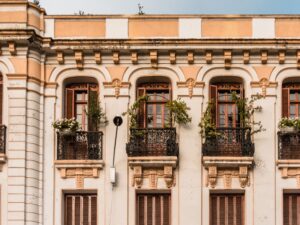
Between the medina and the modern city there’s a grid of streets built during the International Zone period that is slowly being discovered by people who care about architecture. The buildings are a mix of Art Deco, Spanish colonial and early modernist, faded, peeling, completely unrenovated and completely beautiful. Walk along Rue de la Liberté and the streets around it early in the morning before the shops open. The light on the old facades is extraordinary. Almost nobody photographs this part of Tangier because it doesn’t look like “Morocco”, which is exactly why it’s worth seeing.
CAFÉ BABA : THE OLDEST CAFÉ IN TANGIER
Up in the Kasbah, Café Baba has been serving mint tea since 1943. The Rolling Stones came here in the 1960s. Paul Bowles was a regular. The café itself is tiny, a few tables, low ceilings, walls covered in old photographs and serves nothing except tea and coffee. Go in the late afternoon when the light through the small windows turns golden. It costs about 10 dirhams for a tea. It’s one of those places that makes you understand why people fall in love with Tangier.
CAFÉ HAFA : THE MOST ATMOSPHERIC CAFÉ IN MOROCCO
Perched on a cliff above the Strait of Gibraltar, Café Hafa has been open since 1921. It’s built on a series of terraces carved into the hillside, each one dropping lower toward the sea. The Rolling Stones came here. The Beatles came here. Paul Bowles spent decades here. The menu has exactly two things: mint tea and coffee. The view, Gibraltar in the distance, cargo ships crossing the strait, the Atlantic meeting the Mediterranean is completely unforgettable. Go at sunset. Arrive early enough to get a terrace seat. Don’t rush.
THE PHOENICIAN TOMBS : ANCIENT HISTORY WITH NO QUEUE
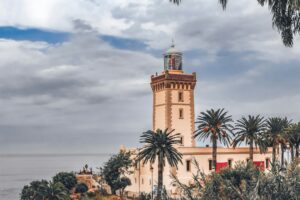
On the rocky coastline below the Cap Spartel lighthouse, there are ancient tombs cut directly into the rock face, believed to be Phoenician, dating back over 2,500 years. There are no signs pointing to them, no entrance fee, no visitors. You park near the lighthouse, walk down a rough path toward the sea, and suddenly there they are: chambers carved into the cliff above the Atlantic. The combination of ancient stone, crashing waves and total solitude is unlike anything else in Morocco.
THE WEDNESDAY AND SUNDAY SOUK : WHERE LOCALS ACTUALLY SHOP
Outside the medina, on the road toward the Cap Spartel, there’s a large outdoor market that runs on Wednesday and Sunday mornings. This is where people from Tangier and the surrounding villages actually shop, vegetables, live chickens, second-hand clothes, cheap tools, spices in paper bags, enormous rounds of fresh bread. It’s loud, crowded, chaotic and completely authentic. Prices are a fraction of anything in the medina. Nobody is trying to sell you a carpet. Go early, it winds down by noon.
PRACTICAL NOTES FOR VISITING TANGIER
Tangier is best visited for at least two nights, one night is not enough to get past the surface. Stay in the medina or Kasbah for atmosphere; the modern city hotels are more comfortable but you lose the whole point of being there. The medina is safe to walk at night, though the area around the port can be hustler-heavy after dark, just walk with purpose and don’t make eye contact with anyone who approaches you unprompted.
The best time to visit is spring or autumn. Summer brings heat and crowds from the ferry crossings. Winter is quiet and sometimes rainy but has a melancholy atmosphere that suits Tangier perfectly.
Tangier rewards the traveler who slows down. Give it time, walk without a fixed destination, and it will show you things that no itinerary could find.